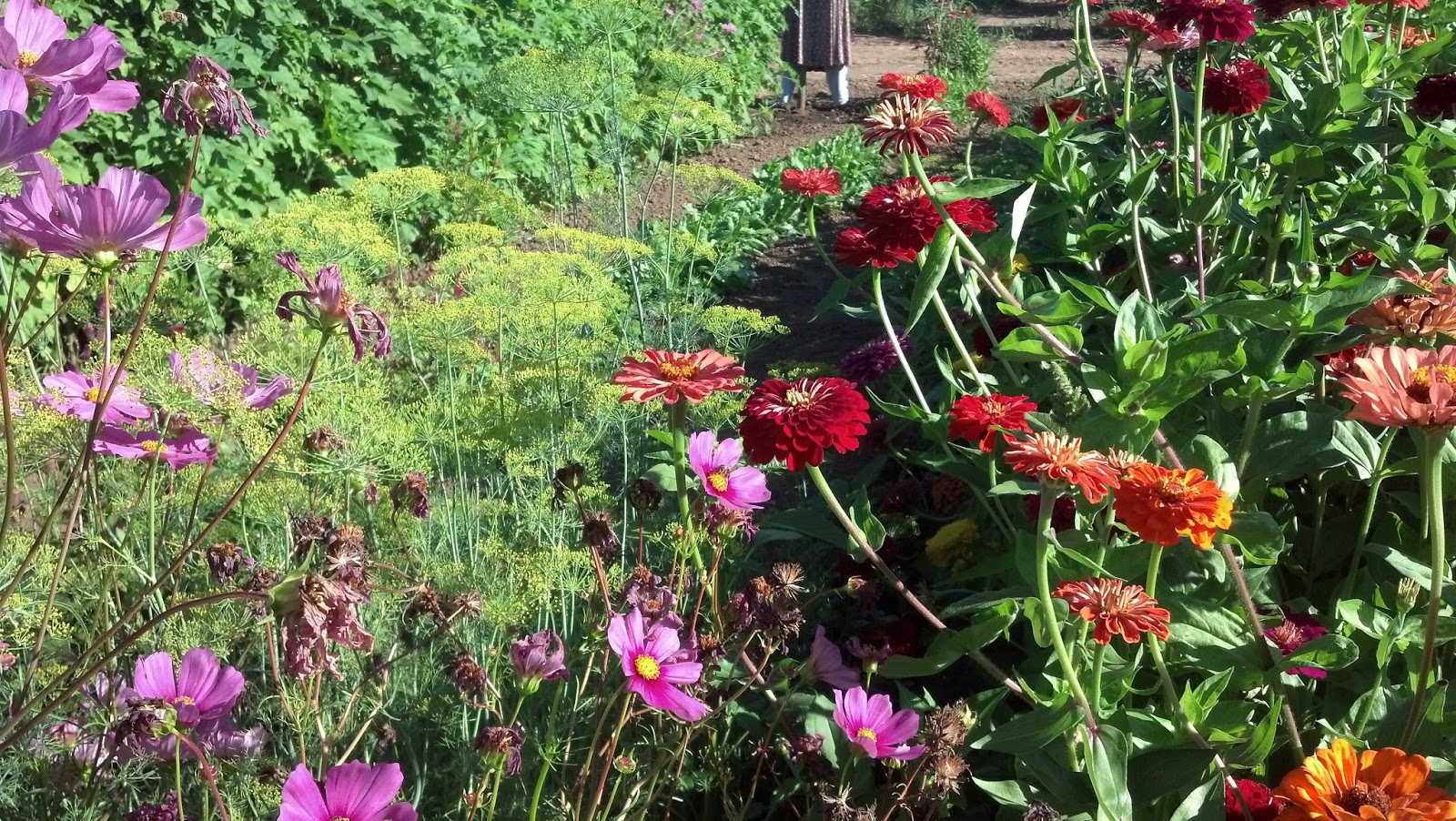
Friday, March 18, 2016

Planting Flowers and Vegetables Using Landscape Fabric-New to us at Windmill Farm

It is a constant debate here at Windmill Farm and probably with almost every small farmer whether to use some sort of weed barrier or not.  It is a hard decision to accept, either one way-a weed barrier or another-spend hours and hours with constant weeding or spend money to pay for someone to weed.

I have done it both ways, several times, but last year the weeds about killed us.  The constant high temperatures made it so difficult to get out for long periods of time to weed.  And weeds grow, well, like weeds!!!  I HATE it if my gardens do not look managed and beautiful.  And our yields are terrible when flowers and vegetables have to complete for nutrients and water with weeds.
Floret Flower photo
I write a blog and am also, a reader of other blogs and I have been reading more that small farmers just can't keep putting down this thin plastic called weed barrier fabric.  And they are going to a heavier weed cloth, called landscaping fabric.  One blog/website I have read for years and is so inspiring is Floret Flowers. She has a special article just about landscaping fabric.  She is so good about sharing information and even provides a chart for various types of plants and the spacing needed to grow each one.  You normally would see the landscaping fabric at nurseries where they put it down under their potted plants or in their greenhouses where they grow potted plants up off the ground on tables to keep weeds from growing below.


The advantages are after each season, you roll them up and they can be used for many years to come.  They don't require pulling up in pieces and having bags of it  go to the landfill.  Many people who have used the heavier, landscaping fabric actually leave them down season after season until it is time to replace.
Clips to hold down fabric

Last year I wanted to try it,but the planting season got ahead of me and I just had to start planting and use the thinner, black plastic weed barrier I had already purchased from the year before.  I got about 1/2 the vegetable and flower rows done before it was time to plant everything.  So half the garden had the plastic weed barrier and half didn't.  And I put it down so quickly and that particular day it was windy, so the plastic only had some dirt on the edges just to get it down. Many rows had dirt showing from row to the next row.  Great places for weeds to grow and take over!!!

I guess I could look at the outcome as: 1)- that I had less weeds in 1/2 the gardens than the other 1/2 that didn't have weeds.  But at the height of the summer, it was hard to tell one side from the other with these tall weeds.
This year, I asked my local supplier of drip tape and irrigation supplies, Feather River Packing Company here in Gridley if he knew where I could purchase the landscape fabric.  He said he would have lots of it for sale, used, soon as he was pulling up about an acre of his nursery field, which is lined completely with this heavy landscaping fabric.  Hot Dog!!!  Used is good, cheaper, close by my house, no shipping.
Frank and I went and got some last week and are starting to lay it out in the rows now that the weather is better.  It is so much easier to handle than the weed barrier type.  It also has lines on it so the rows can be positioned straight.  And the lines allow me to measurer where to burn the holes needed for the plants.

I am so excited about it especially since I will be planting more flowers this year, many will be bulbs that I would like to leave in the ground for a few years without having to replant.  Lucky for our area, we do not receive freezing weather for any extended periods of time so it is possible to leave the bulbs. 
As with everything to do with gardening/farming, it is a life long adventure and education.  My time is better served in other areas rather than weeding.  And being able to manage our farm without the hiring of help really is an asset to whether we can make some money or just be able to break even (or even loose money) at the end of each season.
I will keep you posted on how this new experiment goes.  I can't imagine doing it on huge acreage, but with our small farm, I think it will be a good alternative.

Friday, March 11, 2016

Antique Bird Cages

I used to raise canaries and finches for years and years.  I started out with a pair that I kept in the house.  Since I was an avid antique lover, I wanted my birds to live in a beautiful AND antique cage. The first batch of babies hatched also hatched my life long love of birds and cages.
There is no denying it, having birds in a house is a messy business.  They love to take baths in their water and splatter; they split open their bird seed and the shells land - well everyplace.  But the songs and endless enjoyment you get out of them is worth the mess.
One season of babies, lead to bigger cages until eventually, Frank built me a beautiful aviary outside of our Nevada City house, off the patio.  The wonderous sound of canaries singing and singing all day long was heavenly.  Of course, I never stopped looking for antique bird cages until I had a sizable collection of all sizes.  Unfortunately, when we sold our house in Nevada City to downsize, many went to other lovers of bird cages.  And so did the birds.  The special cages I kept for myself that I couldn't part with, eventually were lost in a fire of our new house in 2005.
Old habits do not die though.  Once we moved to Gridley and I started decorating our 1920s Arts & Craft farmhouse, I had to have a few cages.  But by then, what I used to purchase for $5-$10 are now in the $100s+.
I seem to be drawn to the wooden cages.  I read and was told when we lived in Nevada City, these little wooden cages were used by the gold miners.  They would purchase a canary and cage to take down into the mines to detect gas leaks.  I love the size and the primitive and simple design of them.
Sometimes, you get surprised at what you find.  
There is a local "tent" antique sale in town, called The Hazel Street Vintage.  The co-op of dealers are only open 3 days a month and it always yields wonderful surprises.
A few months ago, one dealer had 4 of these adorable green cages.  They are small so could be used for antique bird shows and sales; or for dealers in market places selling birds.  In the Victorian times, it was quite common for people to have birds in their houses.  One cage manufacturer was Hendryx.
 I had several of these brass Andrew Hendryx cages when I had my Nevada City Collection, the name would be embossed above the bird door and sometimes would even come with a fabulous and intricate bird cage hook.  The company started in 1874 in Connecticut due to the popularity of birds as pets.  There would be pet stores and these ornate and beautifully made cages would be used in stores and homes for all types of birds.
Yes, even the hangers and hooks of antique cages are a prized possession.  They have a large spring and sometimes fancy hooks.  I recall once at a sale, a modern cage, stand and hook were for sale, the cage was new but the stand and hook were old.  I purchased it just for the stand and hook and gave the cage to the thrift store.  
The seed and water containers for the cages are as collectible as the cages.  Mostly because of the porcelain, milk glass, or pottery they are made from and because of their design and beauty.
My mother had a collection of these closed milk glass water/seed containers for years and had a whole display cabinet of them like art.
Cages come in all styles, shapes, materials.  If you are collecting antique cages, I would love to hear what you collect.  Or if you are thinking about collecting them, my advice would be to find the style you like or the era of cages you like.
 One of my friends in Nevada City had a large Victorian home and had a huge twin tower Victorian cage on a stand.  It was fabulous and she had doves in them in her "parlor".
Speaking of doves, I recently purchased an antique  wicker cage for birds.  I believe they were to carry doves or pigeons in them.  I knew what it was when I saw it, I was at a booth at the same Hazel Street Vintage and she had 5 of them, all different.  People were swarming around them and it was the last one available.  The handles were gone and closure not working.  But I purchased it and love it.  I believe doves or pigeons were carted to bird events in them.  Pigeon raising was very popular always clear back into early European times.  Not only were pigeons and doves raised to eat, but their droppings were used in gardens and fields for fertilizer.  Some large estates had huge buildings called pigeonnier or dovecotes.  Another story for another day.
Check those out on Pinterest or Google sometimes, fascinating.

Hope you enjoyed my antique collections of bird cages.


Comments